
A fence that looks secure from the patio is not always secure from a dog's point of view. Dogs test boundaries differently than people do: they probe gaps at ground level, lean on weak points, and size up anything that looks climbable. Choosing the right fence material and getting the details right at the bottom of the fence line matters as much as picking a height.
This guide compares common fencing materials for dog containment and covers the behavioral details, digging, jumping, and squeezing through gaps, that decide whether a fence actually holds up.
What Makes a Fence Work for a Dog
Before comparing materials, it helps to know what you are actually solving for. The American Kennel Club's guidance on keeping a dog from escaping the yard points to a short list of weak points that apply across almost any fence type:
- Height relative to the dog. A fence has to be tall enough that a motivated dog cannot clear it, and the answer depends heavily on the individual dog's size, athleticism, and drive, not a single number that fits every breed.
- Gaps at the bottom. A dog that digs will look for the lowest point along the fence line, and a gap under a panel is often wide enough for a smaller or more persistent dog to squeeze through even without digging.
- Climbable features. Horizontal rails, decorative lattice, or anything a dog can get a paw on can turn a tall fence into a climbing aid rather than a barrier.
- Visual triggers on the other side. A dog that can see another animal, a jogger, or heavy foot traffic through gaps in the fence has more reason to try to get through or over it than a dog behind a solid panel.
Weigh these factors against your own dog's size, energy level, and known habits rather than assuming any one fence material solves all of them automatically.
Comparing Fence Materials for Dog Containment
Wood Privacy Fencing
A solid wood privacy fence removes the visual triggers that come from seeing activity on the other side, which is often the single biggest behavior change owners notice after installing one. Because the panels are solid, there is also no climbing structure for a dog to use the way it might on an open-style fence. The main detail to watch is the bottom of the fence line: ground that is uneven or has settled over time can open a gap under the bottom rail that needs to be addressed, whether that means grading, a buried barrier, or a bottom rail set close to grade from the start. See our wood fencing page for style options.
Vinyl Privacy Fencing
Vinyl fencing shares the same solid-panel advantage as wood for blocking sightlines, with a smooth surface that gives a dog less to grip if it tries to climb. Vinyl panels are also harder to chew or splinter than wood, which matters for a dog that chews on fence boards out of boredom or anxiety. The same bottom-gap and grading considerations that apply to wood apply here as well.
Aluminum Fencing
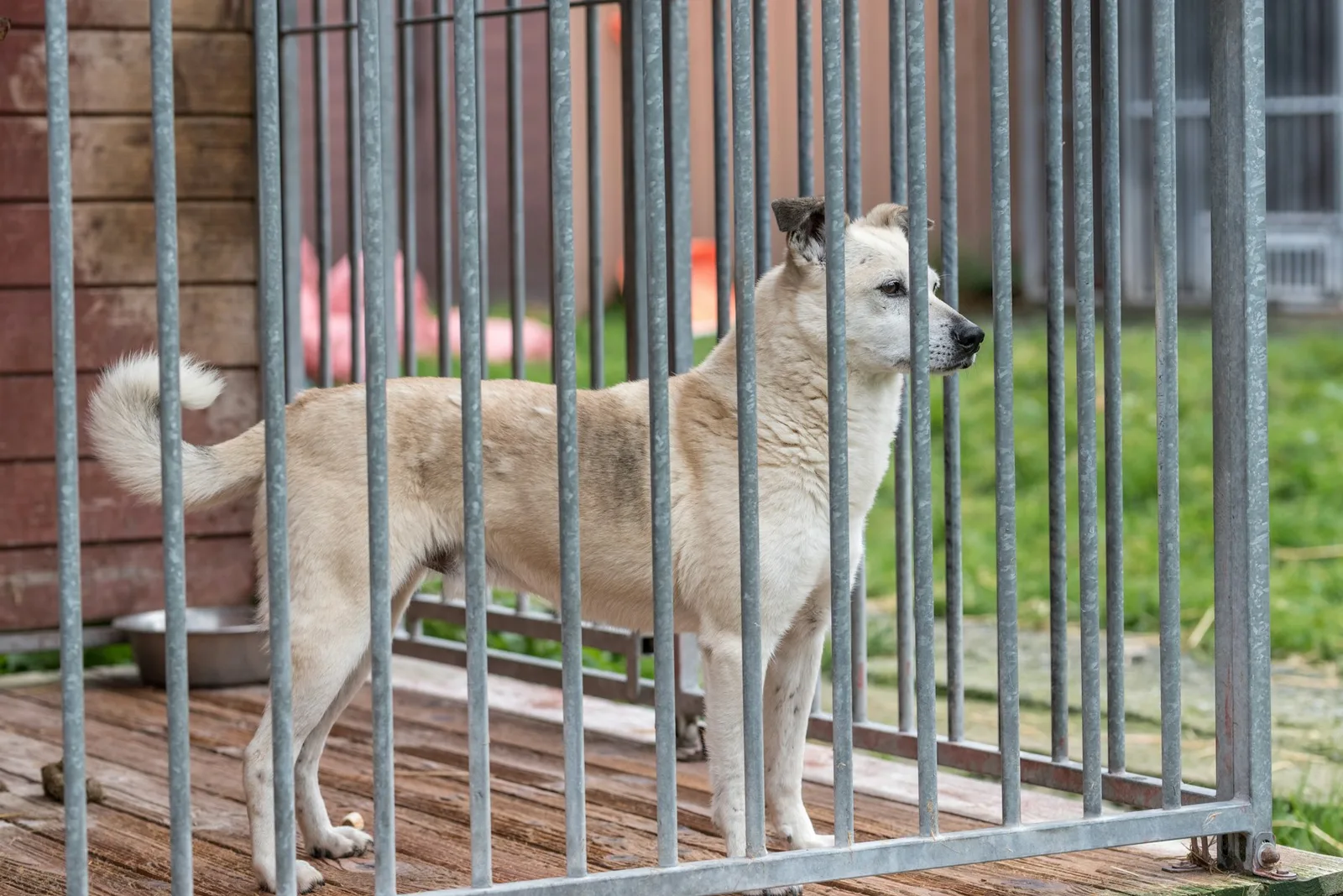
Aluminum fencing is open rather than solid, with vertical pickets at regular spacing. For dog containment, picket spacing is the detail that matters most: a small or narrow-bodied dog may be able to fit through spacing that would contain a larger dog without issue. Because the fence is open, a dog on the other side of an aluminum fence can see and react to activity beyond the yard, which can increase barking or fence-running behavior compared to a solid panel, even though the fence itself may be perfectly secure.
Wrought Iron Fencing
Wrought iron fencing behaves similarly to aluminum for containment purposes: it is a vertical-picket, open-style fence where spacing and anything a dog could use as a foothold matter more than overall height alone. It shares the same visibility tradeoff as aluminum, with sightlines through the fence that a solid panel does not have.
Dealing With a Dog That Digs
Digging is one of the most common ways a securely built fence still fails to contain a dog, because the fence line itself can be solid while the ground beneath it is not. The AKC notes that a dig-proof barrier can be created by installing strips of metal, cement, or large rocks below the surface along the fence line, or by using an L-shaped footer of buried wire mesh that extends outward from the base of the fence so a dog hits a barrier before it can dig deep enough to get under. Addressing known digging spots when the fence is installed is far easier than retrofitting a barrier after a dog has already found a weak point.
Dealing With a Dog That Jumps or Climbs
For a dog with a strong jumping or climbing drive, height alone does not always solve the problem. The AKC's guide to the types of dog fences notes that options like adding a coyote roller or an angled extension at the top of an existing fence can discourage climbing by removing a stable grip point right when a dog reaches the top, rather than only relying on the fence being taller. Removing climbing aids near the fence line, stacked firewood, a low shed roof, outdoor furniture, or anything else a dog could use as a step, closes off another common path over an otherwise secure fence.
Gates Are Often the Weakest Point, Not the Fence Line
A fence line can be perfectly secure while the gate is the actual escape route, whether that is a latch a dog learns to nudge open, a gate that does not close flush with the ground, or hardware that was never rated for repeated daily use. Our fence gate width guide covers sizing and hardware considerations in more depth, but for dog owners specifically, a self-closing hinge and a latch your dog cannot reach or manipulate from the inside are worth prioritizing over appearance alone. Checking the gate after every delivery, lawn service visit, or contractor walkthrough is also a simple habit that prevents a surprising number of escapes that have nothing to do with the fence material at all.
Matching the Fence to Your Specific Dog
There is no single material or height that is correct for every dog, because the traits that matter most, jumping ability, digging drive, body size relative to picket spacing, and reaction to activity on the other side of the fence, vary enormously between individual dogs even within the same breed. A low-energy senior dog and a young, athletic dog in the same household can have very different fencing needs. If you share your yard with more than one dog, plan the fence around whichever dog is the most determined escape risk rather than an average of the group.
A Fenced Yard Is Still Not a Substitute for Supervision
A secure fence is a major safety improvement over no fence or a leash-only yard, but it is not the same as supervision. The ASPCA's general dog care guidance recommends keeping a dog on a leash when outside unless it is in a secured, fenced-in area, which still implies some level of awareness of what is happening in that space. Checking gate latches, watching for a newly dug spot after a storm, and knowing your dog's specific habits all stay part of the picture even after a well-built fence goes in.
Planning a Dog-Secure Fence for Your Yard
If you are planning a new fence with a dog in mind, our yard with a dog overview covers broader safety considerations for pets and children together, while this guide focuses specifically on the material and containment choices that matter most for dogs. Garrido Fences installs wood, vinyl, aluminum, and wrought iron fencing across its service area in Bucks, Montgomery, and Lehigh County, and can talk through picket spacing, bottom-gap details, and height options for your specific dog and yard.
Request a Dog-Friendly Fence Estimate
Whether you are containing a determined digger, a tall jumper, or a dog that just needs a secure yard to run in, contact Garrido Fences to request a free estimate and talk through which material and layout fit your dog and your property.