
A fence gate should do more than complete the fence line. It needs to open far enough for the people, equipment, and vehicles that will actually use it. A narrow gate can turn routine yard work into a headache, while an oversized gate may need heavier posts, stronger hardware, or a different layout to stay aligned.
The best fence gate width is not one universal number. It is the usable opening required for your property, with enough clearance to move through safely and enough support for the gate to operate reliably. Plan that opening before your fence installation begins so the posts, swing direction, latch, grade, and nearby paths all work together.
Start With the Clear Opening, Not the Gate Panel
Gate widths are easy to misunderstand because the advertised or planned panel width may not equal the clear space you can pass through. Posts, hinges, latches, stops, and the gate's opening angle can reduce usable room.
Measure the finished opening at its narrowest point. If the gate cannot swing fully because of a wall, planting bed, slope, or parked vehicle, account for that reduced opening as well. For a double gate, check how the center hardware and the inactive leaf affect the usable path when only one side is open.
A practical planning process is:
- List everything that must pass through the opening.
- Measure the widest point of each item, including handles, wheels, mirrors, and attachments.
- Add comfortable side clearance for steering and normal movement.
- Confirm that the gate can open through its full intended arc.
- Review the opening, posts, hardware, and grade as one system.
This approach is more dependable than selecting a common gate size first and hoping it fits later.
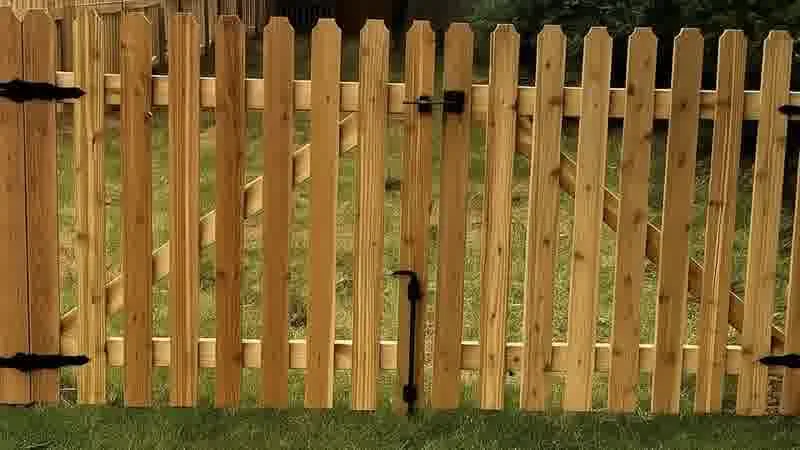
Choose the Width Around How You Use the Yard
Everyday pedestrian access
A walk gate should feel comfortable when you carry groceries, guide a child, walk a dog, or move a trash container. Look beyond shoulder width. Bags, tools, and containers often need more room than a person walking empty-handed.
Also consider where the path leads. A gate aligned with a walkway is easier to use than one that opens into a tight turn, a step, or soft ground. If the property has more than one regular route, the main access point and a secondary service gate may need different widths.
Accessibility and mobility devices
If a gate is part of an accessible route, design around the required clear opening, maneuvering space, threshold, hardware, and operating force rather than relying on the nominal leaf width. The federal 2010 ADA Standards for Accessible Design include a 32-inch minimum clear-opening requirement for doors and gates covered by Section 404.2.3, with specific measurement conditions and exceptions.
That standard does not automatically govern every private residential gate, and clear width is only one part of accessible design. The U.S. Access Board's guide to entrances, doors, and gates also explains how clear width, hardware, maneuvering clearance, and thresholds work together. A qualified professional or the authority responsible for the project should confirm which requirements apply.
Lawn equipment, carts, and utility access
Measure the widest machine or cart you expect to use, not just the mower deck. Tires, handles, discharge chutes, bags, and attachments can extend beyond the body. Leave room to steer through without scraping the posts.
Think ahead, too. A gate that fits the equipment you own today may not fit a future riding mower, compact utility vehicle, wheelbarrow, or contractor cart. If the backyard contains a shed, pool equipment, or a large landscape area, service access can be as important as daily pedestrian access.
Compare material options through Garrido Fences' guides to wood fencing, PVC and vinyl fencing, and aluminum fencing.
Plan Driveway Gates With the Approach in Mind
A driveway opening needs more than a vehicle's body width. Include mirrors, the driver's turning path, trailer tracking, snowbanks, curbs, columns, and any angle between the street and the gate. A straight approach can use space differently from a sharp turn.
A single gate leaf keeps the center of the opening clear, but a wide leaf is heavier and needs more swing room. A double gate divides the span into two shorter leaves, though it adds center hardware and requires both sides to align. The right choice depends on the opening, material, grade, wind exposure, and how often vehicles enter.
Before deciding, test the route rather than measuring one parked vehicle. Walk the intended turning line and identify where mirrors or a trailer could pass closest to the posts. If delivery, maintenance, or emergency access matters, include those users during planning instead of treating the gate as passenger-car access only.
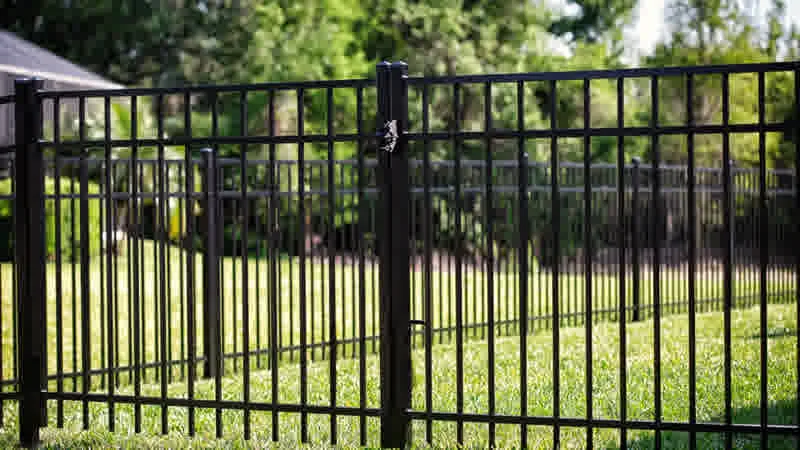
Gate Width Changes the Structural Plan
As a gate gets wider, the leaf, posts, hinges, and latch take on more leverage. The material also matters. A broad solid privacy gate reacts to wind differently from an open aluminum gate, and each design has its own weight and hardware needs.
A sound gate layout considers:
- post size, depth, and footing;
- hinge type and load capacity;
- frame bracing and resistance to sag;
- latch position and ease of operation;
- swing direction and available clearance;
- ground slope, drainage, and seasonal movement;
- space for an operator if automation is planned.
Do not solve an access problem by widening the opening without reviewing the support system. The gate must remain usable after repeated cycles, weather changes, and normal movement around the posts.
Special Rules May Apply Around Pools
Pool gates are safety barriers, so width is only one design question. Latch height, opening direction, spacing, closing behavior, and the surrounding barrier can all matter. The U.S. Consumer Product Safety Commission's Safety Barrier Guidelines for Residential Pools recommend fencing on all four sides of a pool and a self-closing, self-latching gate.
Local code requirements can be more specific, and the controlling authority may vary by municipality. Confirm the rules for the property before construction. If you are planning a pool enclosure in Pennsylvania, Garrido Fences' guide to pool fence requirements in Pennsylvania provides a useful starting point, but it does not replace review by the local code official.
Check the Site Before Finalizing the Opening
Gate placement affects excavation and long-term operation. Posts need suitable locations, but underground utilities, drainage, hardscape, roots, slopes, and property access can limit where they go.
In Pennsylvania, contact Pennsylvania One Call at 811 before excavation so underground utility owners can mark applicable lines. Utility marking does not identify every private line or resolve property boundaries, so ask what additional investigation the site requires.

Walk the proposed gate location and check:
- whether the leaf opens uphill or meets uneven ground;
- where water flows after heavy rain;
- whether steps, walls, planting beds, or downspouts restrict the swing;
- whether the opening lines up with the path, driveway, shed, or work area;
- whether nearby doors or gates could collide;
- whether there is room to operate the latch from the intended side.
If your property slopes, gate alignment and bottom clearance need extra attention. A level gate over changing grade can leave a varying gap, while a gate that swings across rising ground may stop before it opens fully.
A Simple Measuring Checklist
Before requesting a fence proposal, record these details:
- the widest person, device, machine, cart, or vehicle that must pass through;
- the item's actual width at its widest point;
- the direction and angle of approach;
- the desired inward or outward swing;
- obstacles on both sides of the opening;
- surface slope across and through the gate path;
- pool, accessibility, driveway, or automated-gate considerations;
- underground utilities and any private lines;
- future equipment or access needs.
You can explore planning ranges with the fence cost calculator and confirm whether Garrido Fences serves your community on the service area page. A site visit is still the right time to verify the finished clear opening, structure, and installation conditions.
Plan a Gate That Works for the Property
The right gate width starts with real use. Measure what must pass through, allow space to steer, confirm the clear opening, and make sure the posts and hardware match the span. Then review slope, swing, utilities, and any safety requirements before the layout is fixed.
Garrido Fences can help you plan a gate as part of a complete residential fence project. Contact Garrido Fences for a free estimate and discuss the access needs, material, and site conditions for your property.